
Hello, I'm Hayden. I'm one of the archaeologists investigating the site here at Bidcuster. This is the third summer for this community project, and most of the people digging here are volunteers. I'm a full-time archaeologist for the town council, but I was asked to join the project by NHA, a charity which sets up projects like this up and down the country.【Q11】 As you can see, we're next to Bidcaster Castle, which is great because the owners let us use their facilities.
So, how did we get to where we are today? Many archaeology projects happen when an ancient object is found, and in our case that object was a gold coin. Coins are often found by people using metal detectors to look for things buried in the ground or coins are uncovered when wild animals like rabbits have been digging tunnels. Here, a walker found it on the ground after a rainstorm washed away some of the earth and sand. 【Q12】
When the story of the gold coin hit the news, Peter Swift, an amateur historian, contacted me to say he believed there had been a village on this site, centuries before the castle was built. Just by chance, the team found some old maps and documents in our library【Q13】 which showed 500-year-old drawings of ruined buildings on the grassy area between the outer stone walls of the castle and the river. We knew then we were onto something.
Over the three summers the team has been here, we've found the remains of several buildings, and more broken pots than you can count. Normally you'd expect to find brooches and other jewellery, but we're still waiting【Q14】 to uncover any such items. The people who once lived here were skilled at making tools from animal bones, as you'll see when you visit the exhibition.
Besides the discovery of the village, we've also found evidence of human activity on the other side of the river. No other houses or huts so far, but we can see the borders of an ancient field system【Q15】. At one point we found a long wall and thought it was an ancient palace, but it turned out to be a modern wall.
This summer's work will end soon, but we'll be back next summer. In the meantime, we're putting on a series of guided tours for school groups 【Q16】this autumn. Oh, and maybe you saw the TV documentary about our project. That suggests the objects we've found are going to the town's museum, but we don't know that for sure yet.
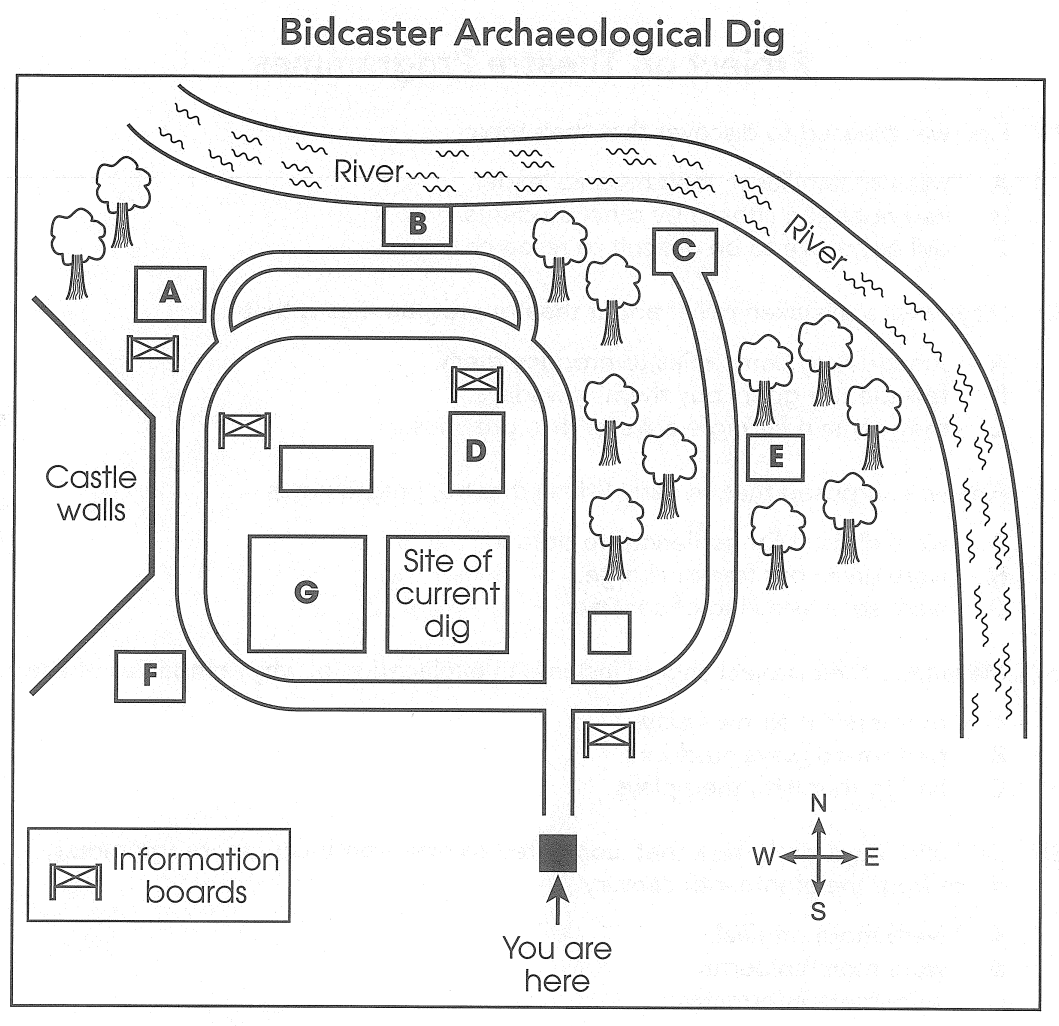
When you enter the site, please make sure you keep to the paths at all times. There are a few other things, the highlights of the site if you like, that I want to mention. Take a look at the map. Our present location is marked at the bottom.
This year, we've identified the foundations of an ancient bridge, and it's really exciting today because a team of divers are in the river searching for lost objects. To reach the bridge, take the main path ahead of you, go straight on, and keep going till the path bends to the left. You'll see a smaller track leading off to the right. Follow that to take you to the river,【Q17】 where the divers are.
You might be interested to see the rubbish pit. This is very near the castle walls in the north-west corner of the site.【Q18】 It actually dates to the time of the castle and not the ancient village. We found oyster shells and fish bones, and we assumed they were thrown from the castle kitchen above.
One area we excavated in the first summer uncovered the site of a meeting hall. We knew it was an important building because it had two rows of post holes, deep enough to support a large roof. It is the largest structure in the central area of the site next to the current excavation area. 【Q19】
Last year we discovered a fish pond in the ancient village. Normally these were beside a river. The pond here is further away, but it's possible the river has moved slightly. Anyway, to get there from here, you turn right at the first information board you come to and follow the path into the trees. Before you come out of the trees, you'll see it on your right.【Q20】 If you reach the river, you've gone too far.
So, does anyone …
Choose the correct letter, A, B or C.
听前预测:定位词为 community project,限定词为 responsible、starting。
题目解析:本题定位词 community project 原词出现,注意目标是识别负责该社区项目的对象,随即听到讲话者进行自我介绍“I'm a full-time archaeologist for the town council, but I was asked to join the project by NHA, a charity which sets up projects like this up and down the country.”,意为“我是小镇议会的全职考古学家,但此次受邀加入 NHA 主办的项目,该慈善机构在全国范围内开展此类项目”。其中 project by NHA 表明项目主办方为 NHA,随后听到 NHA 的补充信息 a charity which sets up projects like this,表明负责对象为 charity,对应选项 B 中的 charity,故选项 B 为该题正确答案。注意选项 B 中 national 这一信息和 charity 距离稍远,在原文中被替换为 up and down the country。原文虽然提及选项 C 中 的 council,但不符合题干要求,不是负责开展项目的对象,而是该考古学家的工作单位,故排除。此外,原文中虽然提及选项 A 中的 owners,但只是说让我们用他们的设施,与题干不符,故排除。
听前预测:定位词为 gold coin,限定词为 how...found。
题目解析:本题定位词 gold coin 原词出现,随即提到“Coins are often found by people using metal detectors to look for things buried in the ground—or coins are uncovered when wild animals like rabbits have been digging tunnels.”,意为“人们用金属探测器寻找埋在地下的物品时,经常会发现硬币,或者当兔子等野生动物挖洞时,硬币会被挖出来”,分别对应选项 C 的内容“A person with a metal detector searched the area.”和选项 B 的内容“The ground was dug up by wild rabbits.”,但注意原文说的是 often,指通常情况下。此外,选项 B 和选项 C 一并出现,逻辑上绑定出现,需要进一步听信息确认本次项目是否符合通常情况。随即听到 Here,表明即将出现本次项目相关信息。继续听,听到 a walker found it on the ground after a rainstorm washed away some of the earth and sand,意为“一名步行者在一场暴雨冲走部分泥土和沙石后,在地面上发现了它”,对应选项 A 的内容“Heavy rain had removed some of the soil.”,意为“暴雨冲走了一些泥土”,故选 项 A 为该题正确答案。
听前预测:定位词为 ancient village、on this site,限定词为 archaeologists、believe。
题目解析:本题定位词 village 和 on this site 原词出现,ancient 在原文中被替换为 centuries before the castle was built,随即听到“Just by chance, the team found some old maps and documents in our library which showed five-hundred-year-old drawings of ruined buildings on the grassy area between the outer stone walls of the castle and the river.”,意为“纯属偶然,团队在我们的图书馆里发现了一些旧地图和文件,上面展现了 500 年前的图纸,描绘了城堡外围石墙与河流间杂草丛生之地荒废的建筑”,其中 maps and documents 对应选项 A 中的 old records,by chance 对应选项 A 中的 lucky。随后听到“We knew then we were onto something.”,意为“那时我们就知道,我们有重大发现”,进一步确认地图和文件便是考古学家认 为存在古代村落的依据,故选项 A 为该题正确答案。而选项 B 的内容 the bases of several structures visible in the grass,意为“草地里可见几处建筑基址的遗迹”,在文中似乎提及此内容,但不是团队直接发现的,而是画稿上的内容,属于偷换概念,故排除。选项 C 的内容 the unusual stones found near the castle,意为“城堡附近发现的罕见石块”,原文并未提及不同寻常的石头,属于无中生有, 故排除。
听前预测:限定词为 team、hoping to find。
题目解析: 本题没有明显定位信息,注意识别时间。答案要满足题干要求 hoping to find,如果是已经找到的,则不符合题干要求,需要排除掉。本题衔接上一题,先提及“Over the three summers the team has been here, we've found the remains of several buildings, and more broken pots than you can count!”,意为“在团队来到这里的三个夏天里,我们发现了多处建筑遗迹,以及不计其数的破碎陶罐”,其中 pots 对应选项 A 的 pottery,意为“陶器”,但 we've found 表明是已经发现的,不符合题干要求,故排除。继续听,原文提及“Normally you'd expect to find brooches and other jewellery, but we're still waiting to uncover any such items.”,意为“通常你会期待找到胸针和其他首饰,但我们仍在期待发现任何此类物品”,对应选项 C 的 pieces of jewellery,且符合题干要求 hoping to find,故选项 C 为该题正确答案。随后听到“The people who once lived here were skilled at making tools from animal bones, as you'll see when you visit the exhibition.”,意为“曾居住在这里的人们擅长用兽骨制作工具,你参观展览时便会看到”,对应选项 B 的 animal bones,但与题干没有任何关联,属于干扰项,故排除。
听前预测:定位词和限定词均为 other side of the river to the castle。
题目解析:本题定位词 other side of the river 原词出现。先听到 no other houses or huts so far,意为“目前没有其他房屋或棚屋”,对应选项 C 的 huts,但相关信息被否定,故排除。随即听到 but we can see the borders of an ancient field system,意为“但我们能看到一个古老的农田系统的边界”,对应选项 B 的信息 the outline of fields,意为“农田的轮廓”,且符合题干要求,故选项 B 为该题正确答案。随后继续听到 At one point we found a long wall and thought it was an ancient palace,意为“在某处,我们发现了一堵长长的城墙,并以为那是古代宫殿的遗迹”,对应选项 A 的 remains of a large palace,意为“一座大型宫殿的遗迹”,但随即反转 but it turned out to be a modern wall,意为“但最终证实是一堵现代的墙”,表明不是古代遗迹,故排除。
听前预测:定位词为 after work ends this summer,限定词为 plan to do。
题目解析:本题定位词 after work ends this summer 在原文中被替换为 summer's work will end soon,注意识别团队打算做的事。随即听到“In the meantime, we're putting on a series of guided tours for school groups this autumn.”,意为“与此同时,我们正在为今年秋季的学校团体筹备一系列导览活动”,对应选项 C 信息 start to organise school visits,意为“开始组织校访活动”,注意题干夏日结束正好对应秋季活动,故选项 C 为该题正确答案。随后听到 maybe you saw the TV documentary about our project,意为“或许你看过关于我们项目的电视纪录片”,对应选项 B 的部分信息 television programme,但没有提及是这个夏天结束时做 的,为干扰信息,故排除。继续听,听到“That suggested the objects we've found are going to the town's museum, but we don't know that for sure yet.”,意为“(纪录 片)表明我们发现的文物会移交至市博物馆,但目前尚未确定”,对应选项 A 的 display for a museum,但是最后表达不确定,故排除。