
雅思口语考试Part2卡壳大脑空白 说不满2分钟怎么办
IELTS Speaking Graph✅115号
考场上Part2刚说完开头,低头一看表才过去20秒?剩下1分钟大脑空白?警惕“总结报告式”回答陷阱,一场只属于#雅思口语Part2 的集体错觉。
“Well... it is a very beautiful place. I like it very much. And... it makes me feel... very happy.”Part2准备时间转瞬即逝,你刚说完开头,低头一看表,才过去不到20秒。剩下的1分钟,你感觉自己的大脑像被拔了网线,只能和考官大眼瞪小眼,尴尬地挤出几个“very good”、“interesting”。考完你可能会叹气:“唉,我词汇量太少了,实在没话可说。”但事实真的如此吗?其实,没话说,根本原因不是你的词汇量不够,而是你的“展开逻辑”出了严重的问题。这是雅思口语学习中的经典痛点:如何用最基础的词,把一个细节展开成有画面感的表达
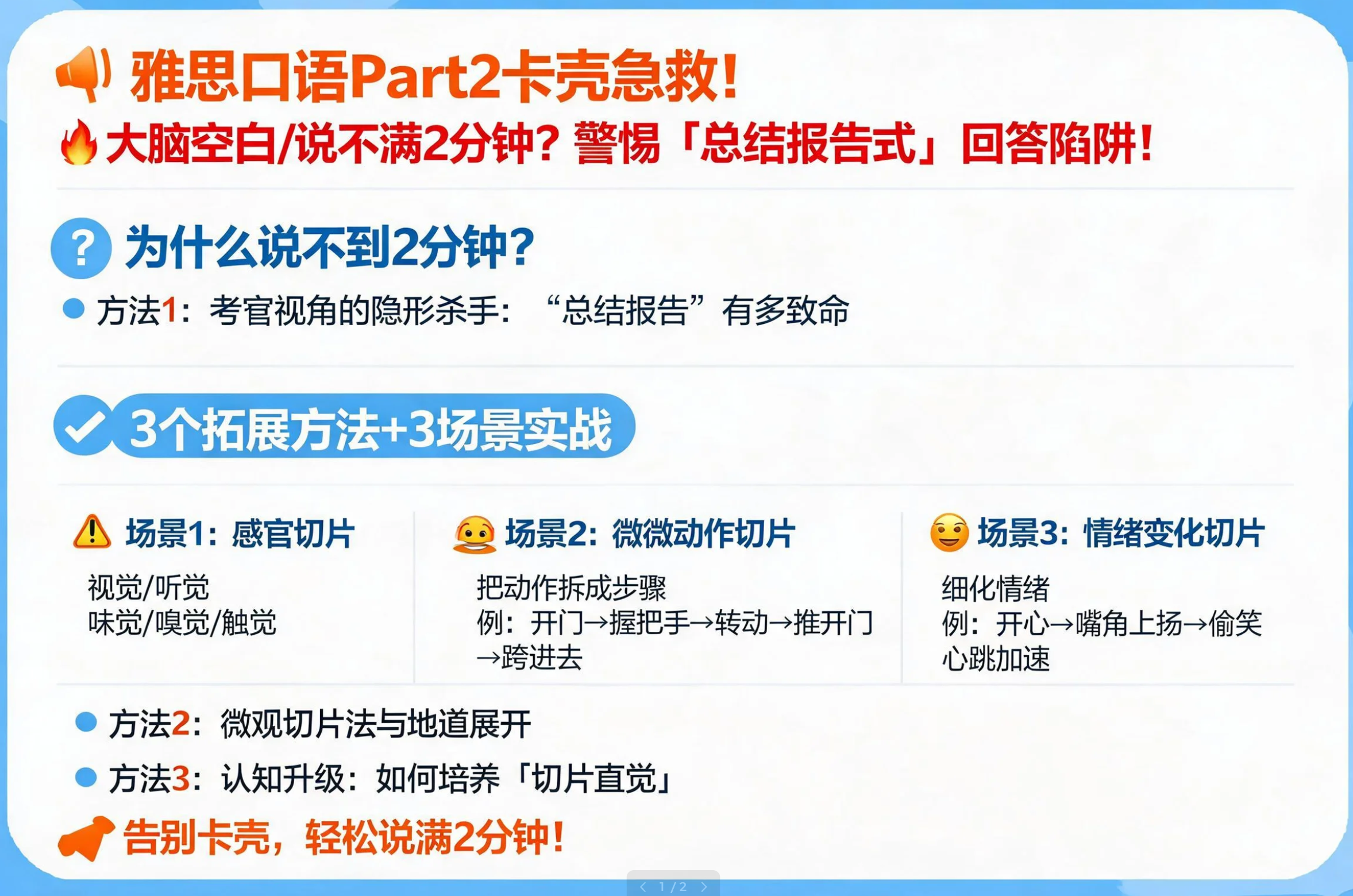
01考官视角的隐形杀手:“总结报告”有多致命❓️
在#雅思口语评分标准 中,考查的是你真实的交流能力、细节展开能力和语言的自然度。很多同学在答题时,大脑里是这样运作的⬇️:👂听到考官说:“Describe a memorable meal you had with your friends.”🧠 脑海中跳出中文:“上周我和朋友吃火锅,很好吃,服务也好,我们聊了很多,我很开心,还想再去。”😎 逐字翻译:“Last week, I ate hot pot with my friends in a restaurant. The food was very delicious. The service was also good. We talked a lot and I felt very happy. I want to go there again.”(你的语法老师可能会给你这句话打对勾✔️)🙅♀️但在雅思考官眼里⬇️:全是宏观评价,没有细节;delicious、good、happy过于空泛;20秒就讲完了,无法共情❌️#雅思口语核心易错点 :用“总结报告”代替“画面感”,用抽象形容词代替具体切片。
02#雅思口语避坑指南: 微观切片法与地道展开
想要避开“无话可说”陷阱,实现分数的跃升,你需要掌握以下#雅思口语高频场景 的“微观切片公式”。
🎯场景一:感官切片(视觉、听觉、味觉/嗅觉/触觉)
😎中式直译:The food was very delicious. The restaurant was very noisy.🤔考官内心OS:怎么个好吃?怎么个吵?我脑海中没有画面。✅️地道替换(#雅思口语Part2语料 ):◽hot steam(热蒸汽)◽the sound of glasses hitting each other(杯子碰撞的声音)◽my mouth felt very hot, and my lips felt a little numb(嘴很烫,嘴唇发麻)🗣️完整示范⬇️:
As soon as we walked in, I could smell the strong and spicy food. The restaurant was full of people talking and laughing, and the sound of glasses hitting each other.
🎯场景二:微观动作切片(把动作拆成步骤)
😎中式直译:I ate the beef. It was tasty.🤔考官内心OS:一口吃掉了?然后呢?✅️地道替换:◽pick up a small piece of beef with my chopsticks(用筷子夹起一小片牛肉)◽put it into the sauce(蘸进酱料)◽take a small bite(咬一小口)🗣️完整示范⬇️:
I remember picking up a small piece of beef with my chopsticks, putting it into the sauce, and eating it. It was very soft and tasty.
🎯场景三:情绪变化切片(不要只说happy)
😎中式直译:We talked a lot and I felt very happy.🤔考官内心OS:除了happy没有别的词了吗?情绪是怎么变化的?✅️地道替换:◽At first, we were very hungry and talked about our busy work.◽But as we ate and shared stories, we felt very happy and relaxed.◽By the end of the meal, I completely forgot my worries.🗣️完整示范⬇️:
At first, we were very hungry and talked about our busy and hard work. But as we ate and shared stories, we felt very happy and relaxed. By the end of the meal, I was full, and I completely forgot my worries.
完整对比示范
普通考生的流水账(无话可说版):
“Last week, I ate hot pot with my friends in a restaurant. The food was very delicious. The service was also good. We talked a lot and I felt very happy. I want to go there again.”⚠️用时不到20秒。全是抽象的宏观评价,没有任何细节,考官无法共情,词汇得分极低。
掌握“切片法”的高分回答(细节狂魔版):
“Well, the most memorable meal was a Sichuan hot pot I had with my besties last Friday. As soon as we walked in, I could smell the strong and spicy food. The restaurant was very noisy, full of people talking and laughing, and the sound of glasses hitting each other. We ordered a boiling red soup, and I could see the hot steam making our faces wet. I remember picking up a small piece of beef with my chopsticks, putting it into the sauce, and eating it. It was very soft and tasty. It was so spicy that my mouth felt very hot, and my lips felt a little numb. At first, we were very hungry and talked about our busy and hard work. But as we ate and shared stories, we felt very happy and relaxed. By the end of the meal, I was full, and I completely forgot my worries.”👍专业点拨:没有用任何极其生僻的词汇,全是#日常词汇 。但是画面感拉满。考官在听的时候,脑海中是有画面的,时间不知不觉就填满了。
03认知升级:如何培养“切片直觉”?
#雅思口语高分 不需要生僻词✅但需要你放弃“总结报告”的思维方式✅你不需要去背长难句,只需做以下三步🎁
第一步:建立“切片本”,拒绝孤立背形容词
不要再写“beautiful——漂亮”。在准备时,直接以“话题+三个切片”为单位记忆。📍考试时直接调用这些现成的积木,不去做中文翻译。比如准备“公园”话题,直接记:👀 视觉:The sunset painted the sky in pink and purple.👂 听觉:I could hear birds singing and leaves rustling.😊 情绪:It made me forget all my worries.
第二步:遇到不会的词,立刻启动“细节替换”
Part 2如果突然想不起“博物馆”怎么说,千万不要卡住,直接切片:✅️I want to go to a place where I can see historical objects.(不卡壳,流利度得分反而更高。)
第三步:不要用太空泛的词
雅思口语是日常聊天,不要把“很好”全部套成very good。✅️如果想说“非常好”,说It’s awesome / That’s great / I’m really into it。🙅♀️千万不要说It is exceedingly satisfactory(这会让考官觉得你不说人话)。
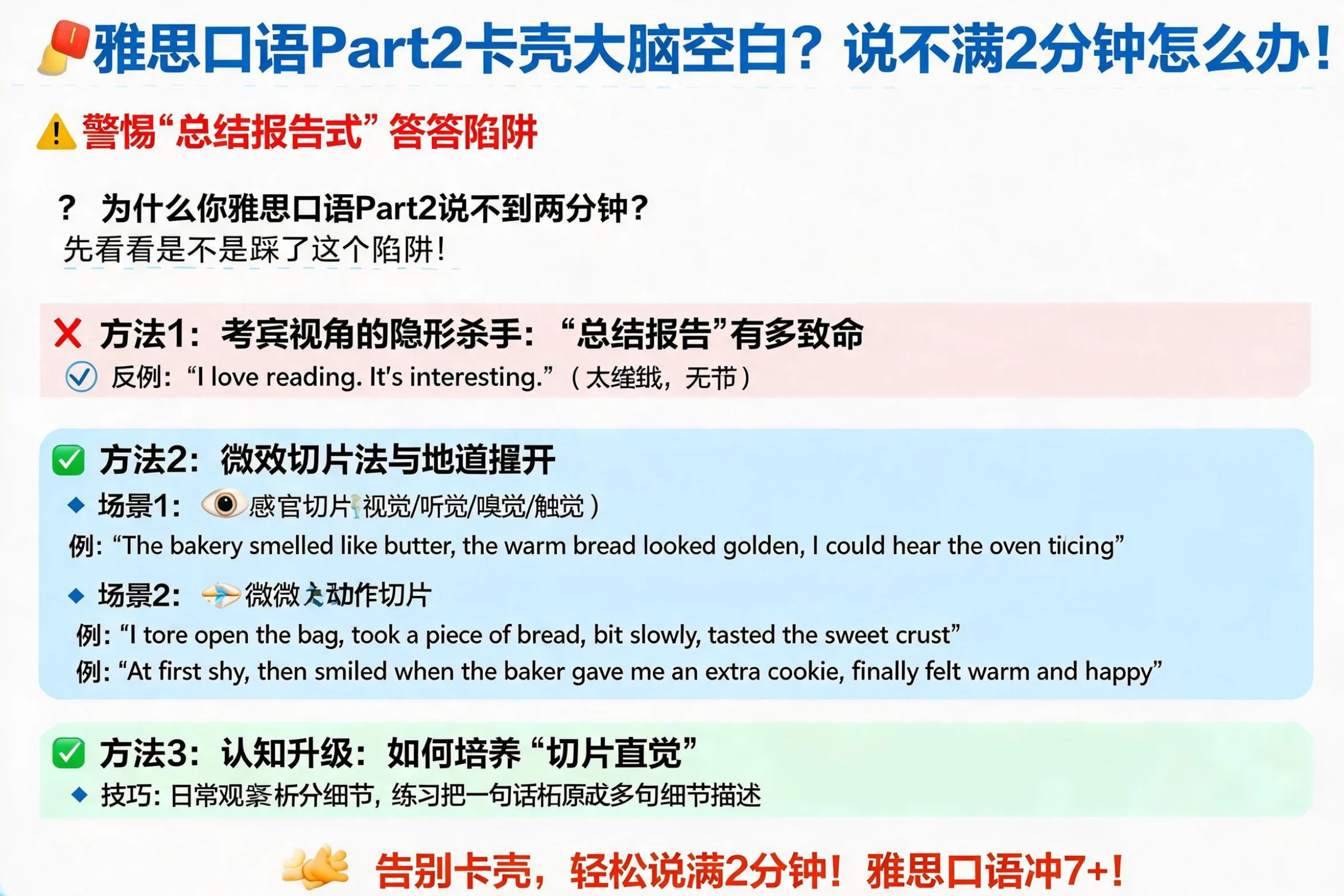
课后训练:一分钟切片日记法
每天睡觉前,用英语回忆当天发生的一个极小的片段,比如喝了一杯奶茶、等了一次红绿灯,听到了一首歌。
规则:不准用good、bad、happy、sad这四个词。强迫自己用三个切片【视觉、听觉、感觉/情绪】来描述它。👉例如:
“今天等红绿灯时,我看到一个穿着黄色雨衣的外卖员(视觉)。雨水打在他的头盔上发出啪嗒啪嗒的声音(听觉)。我当时坐在温暖的车里,突然觉得生活挺不容易的,但也充满力量(情绪)。”
04结语
- 雅思口语part2没话说怎么练
- 雅思口语part2卡壳大脑空白
- 雅思口语part2说20秒就没了
- 雅思口语part2怎么拓展内容
- 雅思口语考场紧张忘词怎么办
#口语卡壳 #考场大脑空白 #雅思口语社死 #Part2说不满两分钟
#雅思口语模板 #口语part2框架 #雅思口语素材 #雅思口语7分
雅思口语,考的从来不是你有多么庞大的词汇量,而是你能否用最简单的词,传递最自然、最有画面感的交流感。别让“总结报告式”回答成为你屠鸭路上的绊脚石。从今天起,停止干瘪的总结,开始细腻的切片。当你学会把一个小细节放大,你就真正掌握了拿捏考官耳朵的密码。